TODAY -
✦

A Nation Under Different Nomenclatures

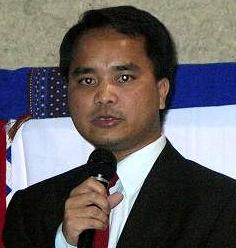
By Nehginpao Kipgen *

When invited to write an article for the 'The Chin Student Journal' on the topic I am passionate about, varying thoughts begirded my mind. Of the umpteen important issues, the impact of nomenclatures on the Chin-Kuki-Mizo people was one unparalleled subject.

Historically, our people were independent from foreign domination. In the evolving process of international politics, we have been dispersed in different parts of the world – notably in Bangladesh, Burma and India.

Our history has been passed on orally with little or no written records of our own. The chieftainship was a cardinal institution. This intrinsic system is still practiced in Manipur and some adjoining states in the northeast India. It was abolished in Chin state in 1948 which became the genesis of Chin National Day.

We are a small group of people approximately 2 million population (only an estimate figure). The judiciary system we had corroborated the significances of mosaic culture and custom in our society. Villages were administered by chiefs from heads of clans.

An online dictionary.com defines nomenclature as "a set or system of names or terms, as those used in a particular science or art, by an individual or community, etc."

There often betided arguments and counter arguments whenever nomenclature question had been broached. Lucubrating our history, one should neither be stupefied nor petrified; there had been feuds between families, clans, inter and intra-villages. At many instances, the affrays ended with internecine repercussions.

The fact that the same people are known by different names is a consequence of colonialism and influence by others. Traditionally, we were identified by clan or village names.

When outsiders came into contact with us, they called us the way they saw or understood us. The western writers recorded us as Chin in the Chin Hills, Lushai in the Lushai Hills and Kuki in other parts of northeast India.

For the sake of administrative convenience, the Burmese government vaguely identifies 53 sub-ethnic groups under Chin nomenclature. The groups in alphabetical order are:

  • Anu,
  • Anun,
  • Asho (Plain),
  • Awa Khami,
  • Chin,
  • Dai (Yindu),
  • Dim,
  • Gunte (Lyente),
  • Gwete,
  • Haulngo,
  • Ka-Lin-Kaw (Lushay),
  • Kaung Saing Chin,
  • Kaungso,
  • Khami,
  • Khawno,
  • Kwangli (Sim),
  • Kwelshin,
  • Lai,
  • Laizao,
  • Lawhtu,
  • Laymyo,
  • Lhinbu,
  • Lushei (Lushay),
  • Lyente,
  • Magun,
  • Malin,
  • Matu,
  • Meithei (Kathe),
  • Mgan,
  • Mi-er,
  • Miram (Mara),
  • Naga,
  • Ngorn,
  • Oo-Pu,
  • Panun,
  • Rongtu,
  • Saing Zan,
  • Saline,
  • Sentang,
  • Taishon,
  • Tanghkul,
  • Tapong,
  • Tay-Zan,
  • Thado,
  • Tiddim (Hai-Dim),
  • Torr,
  • Wakim (Mro),
  • Zahnyet (Zanniet),
  • Za-How,
  • Zizan,
  • Zo,
  • Zo-Pe,
  • Zotung.
Many of the spellings here are different from what the locals use.

Although these people belong to the same mongoloid stock and speak Tibeto-Burman languages, any in-depth analysis could escalate into controversy.

On the other side of the border in Manipur state, the Indian government recognizes them as three separate ethnic entities:
  • Kukis,
  • Meiteis and
  • Nagas
. Despite having a common tribal heritage, Meiteis are categorized in general category population while Kukis and Nagas are placed in tribal category.

In Chin state of Burma, people from Halkha, Falam and Tiddim townships constitute the bulk of our population. In Mizoram, the Lushais (Duhlian dialect speakers) are the majority; and in other parts of northeast Indian states, particularly in the state of Manipur, the Thadou dialect users form the majority.

The term Mizo became popular in the 1940s with a view to uniting all the people in the then Lushai Hills. The introduction of the Lushai Hills Autonomous District Council in 1952 led to the abolition of chieftainship in Mizoram.

As India was closer to independence, the Mizo Union (formerly known as Mizo Common People's Union) demanded that the Chin-Kuki-Mizo people inhabited areas adjacent to Lushai Hills be included in the new state. The move was challenged by United Mizo Freedom which advocated for Lushai Hills to join Burma after independence.

During the days of Mizo National Front, our people from different quarters joined the movement in one way or another. However, a dream of amalgamating different geographical regions was unsuccessful. With the formalization of Lushai Hills into Mizoram state on February 20, the Lushai Hills became a unit of the Indian Union in 1987.

The terminology 'Mizo' which is more or less synonymous to 'Zomi' simply means hill people. Similarly, the term 'Kuki' is believed to be an Assamese or Bengali word meaning hill people or mountaineers. In other words, both Kuki and Mizo nomenclatures denote hill people. The origin of 'Chin' is convincingly not defined yet, though there are a number of theories.

In the context of Manipur, according to earlier British ethnographers, the Kuki group consists of 22 tribes:
  • Aimol,
  • Anal,
  • Chiru,
  • Chothe,
  • Gangte,
  • Hmar,
  • Koirao,
  • Koireng,
  • Kom,
  • Lamkang,
  • Maring,
  • Mizo (Lushai),
  • Monsang,
  • Moyon,
  • Paite,
  • Purum,
  • Ralte,
  • Simte,
  • Sukte,
  • Thadou,
  • Vaiphei and
  • Zou
. Due to socio-political benefits attached to it, new tribe(s) recognition may be in the offing.

As per 2001 census, the Thadous form the single largest unit of tribal population in Manipur. Though outsiders call or know them as Thado or Thadou, some clans within the group are hesitant to identify themselves as such, and thus becoming one most contentious issue and divisive force impeding the unity and progress of any Kuki national movement.

In 1946, an ethnic-based political association called Kuki National Assembly was formed by the non-Naga tribal groups of Manipur. Later, not pleased with alleged Thadou dominance and supremacy, the non-Thadou groups began to look for a more democratic association which gave birth to Khulmi National Union in 1947. Until today, despite belonging to the same family, a wedded relationship cannot be established.

Also in Manipur, seven tribes fall under Naga appellation:
  • Angami,
  • Kabui,
  • Kacha Naga,
  • Mao,
  • Maram,
  • Sema and
  • Tangkhul.
In recent years, some Kuki tribes have seemingly been assimilated into Naga fold partly due to geo-political advantages, and also partly due to the Naga armed movement.

While their brethrens have had a statehood status under the aegis of Chin in the Chin Hills and Mizo in the Lushai Hills, the Kukis are stressing the need to come together and demand their inhabited areas in the form of state or autonomy – with particular reference to a Kuki state demand in Manipur.

Given that India is a burgeoning democracy, our people in India are advancing academically and politically. Perhaps, they may have produced more educated individuals, governmental and non-governmental officials than our people from Bangladesh and Burma combined have procreated. Among others, we can see some outstanding individuals who have been elevated to ambassadorial posts.

Generic terminologies such as Eimi, Khumi, Laimi, Zomi, Zo et cetera are also gaining momentum endogenously. On the other hand, there are others who are tenaciously inclined toward the names we are internationally known with. There are also pockets of population who tend to identify themselves distinctively. In every sub-group, elements of both extremism and moderatism exist.

It is not an awry phenomenon to identify ourselves with different names depending on our local or regional dialects. Nonetheless, context or geographical connotation is something that cannot be easily done away with. In Burma, people will continue to call us Chin; Mizo in Mizoram, and Kuki in other parts of the northeast Indian states, particularly in Manipur.

People who prefer Chin refer to all our people when they use the term. Similarly, people who prefer to use either Kuki or Mizo mean to include the same people. Likewise, when names such as Eimi, Khumi, Laimi, Zomi, et cetera are used in local dialects, they refer to all of our people.

The bottom line is that as long as we disagree to agree on having a common platform, our people will remain divided under different nomenclatures despite knowing the fact that we are of one family. If this pattern is to continue unaddressed, future generations could be drearier.

I charily chose this polemic but pivotal subject to inculcate the hearts and minds of the Chin-Kuki-Mizo students and youngsters around the world. No academic research findings will suffice unless our consciences convince us to come together under one nomenclature. Otherwise, we will have to bury ourselves bickering over this.

Finally, let me end by quoting a line from my 2006 Chin National Day message: "Going to school with the eventual aim of making money is good, but it is even better if one can go to school for building his intellectual capacity and enhancing self-confidence in this competitive global village."

Note: The article is circulated with the permission of CSUNA for wider audience.


Nehginpao Kipgen


* Nehginpao Kipgen is the general secretary of the US -based Kuki International Forum and a researcher on the rise of political conflicts in modern Burma (1947-2004). He can be contacted at nehginpao(at)yahoo(dot)com . This article was webcasted on July 07, 2008.


* Comments posted by users in this discussion thread and other parts of this site are opinions of the individuals posting them (whose user ID is displayed alongside) and not the views of e-pao.net. We strongly recommend that users exercise responsibility, sensitivity and caution over language while writing your opinions which will be seen and read by other users. Please read a complete Guideline on using comments on this website.


LATEST IN E-PAO.NET
  • Digital Revolution & MK Binodini Devi
  • Violence in Manipur 2023-2026 : Timeline
  • Exploring The Vanishing Self #15
  • Letter From A Lost Crony :: Poem
  • Procedural lapses in dismissal of Dr Bimol
  • Manipur Sanaleibak (The Golden land)
  • Training on Seismic Hazard @MU
  • 2026 edition of Hnahsin Kut
  • Oncology & Neurosurgery OPD launched
  • Yaoshang Thabal Competition #5: Gallery
  • Orchids of Manipur
  • Pharmacists: A misunderstood profession
  • Vision Service Week at Ibotonsana School
  • Drone Tech Bootcamp at NIT Meghalaya
  • Athokpam Krishnakanta : World 2% Scientist
  • No Solution Without Identifying "Kuki"
  • Stands in Solidarity with Prof Bimol
  • Taking the idea of Manipur to Senapati
  • Yumjao Lairembi Haraoba #3: Gallery
  • 'Enoong Ngallamdai' :: Movie Review
  • VanDyke Release: Diplomacy or US pressure
  • Mental Health Awareness at High Court
  • 2026 NAMA Research Grant [Upd]
  • Fermented food for beauty
  • Mizoram Targets 5-7% Tourism Share
  • The hills continue to burn
  • Hearthside Story of Naothingkhong #2
  • Between Delhi Power & Valley's Protagonists
  • The Zeliangrongpui at a crossroad
  • Mushroom Cultivation Training at Konthoujam
  • Break from within :: Poem
  • White Canes to Govt Ideal Blind School
  • Concerned: Conflict - Yimkhiung & Tikhir
  • Mizoram Travel Fest 2026
  • Condolence : Kh Armstrong Charang
  • Turning Imphal into a dumping site
  • Sushila & Bichu @Airport #2: Gallery
  • When prime-time spectacle replaces priorities
  • For a new world organization for peace
  • Intl Day for Disaster Risk Reduction @MTU
  • Solidarity with Professor Angomcha Bimol
  • Intl Day for Disaster Reduction @Wangkhei
  • Condemns Barbaric Killings
  • Schools, roads, power & water supply
  • 'Meeyamgi Khollao Khongchat' #2 : Gallery
  • RIST Talk #76: Gravitational-Wave
  • Breast cancer month, October, 2026
  • Free Screening of "Ishanou"
  • Unlocking potentials of 7 horticultural crops
  • Skies and me :: Poem
  • Eramdam hanna kanbiyu
  • The hills, the SoO camps
  • Mera Chaorel Houba @ Kangla #1 : Gallery
  • China's Mayor Economy
  • My muse :: Poem
  • Condemns Killings & Beheading of Civilian
  • Who doesn't do Vote Chori ?
  • EZE Perfumes Enters Northeast
  • One to one meet with PM
  • Exploring The Vanishing Self #14
  • 61st Hunger Marchers' Day #3 : Gallery
  • Humlennganba, Saka : Eming
  • Two interviews, one empty table
  • A landscape of silence :: Poem
  • NSS Runathon for Peace 2026
  • Gender equality- central to diplomatic leaders
  • Manipuri Calendar for year 2027 : Download
  • Meiteilon not Tibeto-Burman language: Rvw
  • Visit to George Gordon's tomb at Canchipur
  • Anandkumar Naorem: World Top 2% Scientist
  • Protect the hills to protect the valley
  • Call for Papers on Manipuri Pony
  • Ashok Singhal Ji - A Karmayogi
  • Addressing the basics of life
  • 228th Bheigyachandra @Nabadwip #1: Gallery
  • Wildlife Week Celebration at Thanga
  • Evolving women's role in Manipur tourism
  • Where do we go from here ?
  • Training Programme on Mushroom
  • Festival look for Navratras
  • Condolence : Demise of Adino Phizo
  • Significant Delhi invite to 3 leaders
  • Heterogeneous Structure of Meitei Society
  • Concert @ 18th Orange Fest #1: Gallery
  • When water management was Statecraft
  • Who switched off the respect :: Poem
  • All is not yet lost for Manipur
  • Wildlife Conservation: Securing the Future
  • Exam : Post of Under Secretary (Law)
  • Understanding narco-terrorism
  • 1500 Burma Refugees Families in 1968-1973
  • 17th World Bamboo Day : Gallery
  • Land affected families: NH-202 in Ukhrul
  • Training Programme on PCB Repair
  • World Habitat Day 2026
  • AMR survivor & WHO call to protect medicines
  • Cut fuel taxes, not food
  • Creating chaos on roads of Imphal
  • Sushila & Bichu @Airport #1: Gallery
  • Manipuri Pony: Case for Animal Science Univ
  • Hemp plant for sustainable textile & Manipur
  • Flame of the lamp & our cultural sensibility
  • Without you :: Poem
  • Welcomes Lalremsiami, Lalthantluangi
  • On the growing roadside eateries
  • Naga Peace Process: Indo-Naga Talk: Timeline
  • 36 Names: Manipur at the Asian Games
  • Abok Ki Singju to Premiere
  • A vision fragmented by corruption :: Poem
  • Gandhi Ji's 3 monkeys and Manipur
  • AI-powered X-Rays are helping find TB
  • Mizoram Reward Lalremsiami, Lalthantluangi
  • 15 years in power Vs 10 years in power
  • Exploring The Vanishing Self #13
  • US-Manipur Digital Archiving Workshop
  • 8th Cultural/ Freshers' Meet for Rongmei
  • The Same Smoke :: Poem
  • Supriya looks at HYROX World C'ships
  • AI4SEVA Hackathon @IT SEZ, Mantripukhri
  • 38th Foundation Day- NIELIT Imphal #2
  • Heikru Hidongba @Bijoy Govinda : Gallery
  • Manipur's Indigenous Natural Farming System
  • Basic human needs a struggle for Sinakeithei
  • Demise of Pame, Marinmai, Lianvela
  • When I met the pugilist Sarita
  • 38th Foundation Day of NIELIT Imphal #1
  • Mizoram's Anthurium Festival Returns
  • Poll fever seems to be catching up
  • My attempt - Meiteilon is not Tibeto-Burman
  • XXXII National Thang-Ta C'ship concluded
  • One Village One Product: A better alternative
  • When machines can answer, who will judge ?
  • Explain motive- Tronglaobi Terror Attack
  • Merger of 5 elected members of NPP
  • Namghar Unites Assam & Maharashtra
  • Trade and commerce : In a limbo
  • 130th Irawat Anniversary : Gallery
  • Lamyanba Irabot Day at Itanagar
  • Irabot's Ideals Remembered at Mumbai
  • Coffee as a sustainable alternative to poppy
  • Her Godname :: Poem
  • Polyendocrine Metabolic Ovarian Syndrome
  • Rejoinder to NPCC
  • Need to get priorities right
  • Irawat and Meetei National question
  • XXXII National Junior Thang-Ta C'ship
  • World Heart Day 2026: Don't miss a beat
  • Science in everyday life
  • Nature Education Workshop
  • Rejoinder to Dr S C Jamir
  • Daslakshan Mahaparva: Festival of 10 supreme
  • Focus back on SoO camps
  • Raengdai Vs NEROCA : Durand Cup : Gallery
  • October Calendar for Year 2026 : Tools
  • Lebensraum or ethnic cleansing
  • World Alzheimer's Day 2026
  • Sensitization Workshop on POSH
  • Mourns Passing of Aribam Shantimo
  • Lecture on 'Indigenous Knowledge Systems'
  • Rejects allegations by NPCC President
  • The narrative Manipur needs
  • Tour Diaries of Maxwell & Higgins #2
  • Laitonjam Rishikanta @ Asian Bodybuilding
  • First poster of Interlude released
  • In the womb of time :: Poem
  • Running an abnormal State
  • Khunung Eshei & Mukna competitions
  • Conference: Challenge in Sustainable Science
  • Rolling back the highway blockade
  • Exploring The Vanishing Self #12
  • Manipur Mesopotamia Force WWI : Gallery
  • PhD in Manipur : Fund it, Fix it
  • Many Voices, One State: Manipur's dilemma
  • Me and Moon: Both do the night shift : Poem
  • Putting rights: Body autonomy & sexual health
  • Green Tea for beauty
  • Yaoshang Thabal @Khurai #2: Gallery
  • AI = Arangpham Intelligence, the Frankenstein
  • World Pharmacists' Day 2026
  • Tapes of 1979 Film 'Ashroy' Discovered
  • From Pangaea to the unpredictable Earth
  • In a Crooked Room :: Poem
  • Debt recovery should be done, but within law
  • Regionalism : New political flavour
  • Chali-Saba - Kang Ningol Palli #1: Gallery
  • Book Release: Exploring The Vanishing Self
  • The Echo After Forever :: Poem
  • The paradox of Kukiland
  • Dr Wairokpam Yaiphaba : Fulbright Fellowship
  • Essay, Painting & Speech Competitions
  • Manipur : Mixture of opposites
  • Naothingkhong & Pitanga #1: Hearthside Story
  • Meiteilon is still not a Tibeto-Burman language
  • 52nd Foundation Day of AMWJU : Gallery
  • The chokehold on Manipur's potential
  • Another Langban has com :: Poem
  • Ageing needs a gendered human rights
  • Mizoram's 2026 festival season opened
  • Inspect the SoO camps
  • 61st Hunger Marchers' Day #2 : Gallery
  • lEkoLdugi warisiH :: Seireng
  • Can Strong Anti-Racism Law save NE Indians
  • Before Building a Viksit Bharat, Learning
  • Quality planting for Pineapple & Banana
  • Seminar: Career Options in Life Sciences
  • Fitclass Gym Moti Nagar Opens
  • Burning hills of Manipur
  • Culturals @Beating of Retreat #4 : Gallery
  • Justice for 6 Liangmai Nagas #2 : Gallery
  • 17th World Bamboo Day 2026
  • 12th Manipur Legislative Assembly : Gallery
  • The 731, and those who may follow
  • Exploring The Vanishing Self #11
  • Little Flower School, 1973 batch : Gallery
  • Bichu Kharibam: FIH Magic Skill Award
  • Tour Diaries of Maxwell & Higgins #1
  • Ningol Phida - Shumang Leela #2 : Gallery
  • Study: Social Worker on Counselling Practice
  • India-Myanmar boundary : Mistakes of 1967
  • Radio E-pao: 5 new songs updated
  • Chiru Maroi : Scientific Documentation
  • Academic Administration Course @MU
  • To our star Tamo Vicky, Vikram Chongtham
  • Vice President visited Manipur : Gallery
  • Langban Tha Katchaba @Haying #1 : Gallery
  • Hiring @ 4-Star Hotel in Udupi
  • Ibudhou Pakhangba Haraoba #1 : Gallery
  • Protest by Researchers @DM Univ : Gallery
  • Meitei Esei
  • US Ambassador @ CM Mantripukhri : Gallery
  • Chongtham Vikram: Delhi Cannot Explain Away
  • A teacher does not leave when his classroom
  • 'Meeyamgi Khollao Khongchat' #1 : Gallery
  • Candle Light- Chongtham Vikram : Gallery
  • Manipuri Pony Heritage Talk to Students
  • Colonial records: Hill Areas, 1891-1947
  • Joint Resolution: Abrogation of SoO
  • Elimination of Racial Discrimination
  • Justice for 6 Liangmai Nagas #1 : Gallery
  • Manipur Can Simply Be Manipur
  • PhD Admission at Assam University
  • Teachers' Day Celebration : Gallery
  • Census 2027 for Manipur deferred
  • Read Meitei Mayek news in romanized English
  • 24-hour Gen Strike (Sep 1) : Gallery
  • Panthoibi Anoi Khuthek #1 : Gallery
  • 48-hour General Strike by JFD #3 : Gallery
  • The flame of Haipou Jadonang
  • Kang Khichri Chaba #2 : Gallery
  • Relevance of NRC, 1951 for immigrants
  • Featured Front Page Photo 2026 #4: Gallery
  • The King Who Caught a Bird : Konthoupa
  • Meira Rally 'No NRC, No Census' : Gallery
  • 48-hour General Strike by JFD #2 : Gallery
  • 35th Manipuri Language Day, 20 August
  • The chappals we leave behind
  • Search 25 years of e-pao.net
  • Colonial Knowledge Production in NE India #23
  • 360° panoramic view of spots in Manipur
  • Final Merit List : Manipur Civil Services 2022
  • PUCL Tribunal report: A shadow of partiality #3
  • PUCL Tribunal report: A shadow of partiality #2
  • PUCL Tribunal report: A shadow of partiality #1