


Solar Wind Energy Less Expensive
Dhanabir Singh Thokchom *
In October 2011, the global population reached seven billion. It is on its way to more than nine billion, and it took only a dozen years to add the last billion.
While the population explodes and economies grow, a significant number of people are becoming increasingly affluent. With money to spend, they simply consume more. More consumption means more demand for energy.
As that demand increases, we are burning enormous volumes of fossil fuels (oil, coal and gas) to meet our needs. Look at China and India, by 2010, just eight years from now, these two countries alone will account for 45% of the increase in global primary energy demand, more than double their current energy use.
Unfortunately, as we know, the perils of fossil fuels are many.
For one, they are the primary contributors to climate change. Coal is the most carbon-intensive fuel and the single largest source of greenhouse gas (GHG) emissions.
There's also only a finite amount of fossil fuels, and we're quickly using them up. In fact, we're depleting them so fast that we're leaving no place on earth to find more – e.g. shale gas, oil from deep-water platforms and oil. This sourcing is expensive, challenging and dangerous.
Processing and using these unconventional fossil sources also produces large quantities of GHGs and chemical pollution, and puts unsustainable demands on our freshwater resources, with severe impacts on biodiversity and ecosystem. It's clear that we can't rely on fossil fuels alone. Along with energy efficiency and conservation measures that see more output for every unit of energy, there is a clear and urgent need to switch to renewable energy.
Unfortunately, there are still some myths circulating around renewable energy. Some skeptics believe renewable energy technology is too expensive, too complicated and difficult to incorporate and regulate. In other words, they think it's all a pipedream. At one time, that may have been true. But not today. Great strides have been made in renewable energy technology and cost reduction, and countries around the world have been rapidly getting on board. Today, renewable energy is workable and viable. Here's why…
The Realities about Renewable Energy
Renewable energy comes from natural resources such as sunlight, wind, rain, tides and geothermal heat (the heat of the earth). As such, it's naturally replenished. In other words, unlike fossil fuels, it's an infinite resource. Renewable energy generally has considerably lower environmental impacts than conventional fossil fuel or nuclear energy. It does not pollute the planet or cause dangerous climate change. These fuel sources are cheap and abundant, generating 3,000 times our present-day energy consumption. We have the technology to largely harvest these resources and satisfy our needs.
Okay, but what about cost? Isn't renewable energy more expensive than fossil fuels? The answer is no. Renewables are an increasingly attractive choice. Take wind power, for instance. Wind power is now 80% less expensive than it was 20 years ago and solar panels are 70% less expensive than they were only three years ago.
Improvements in Renewable Technology
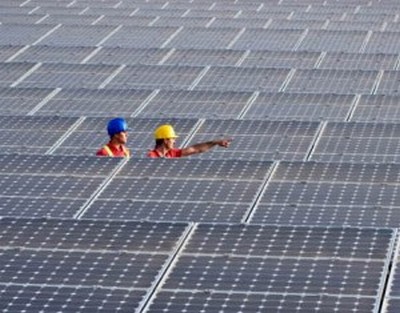
The technology around renewable energy has also grown far more sophisticated. Technological progress is driving down the initial investment costs of renewable technologies and increasing their efficiency. 2010 saw extensive growth in equipment manufacturing, sales and installation. Solar photovoltaics (PV) technology improved, so costs went down, and manufacturing went up. Cost reductions in wind turbines and biofuel processing technologies also contributed to growth. Many new technologies have evolved, including next generation batteries that are improving reliability. Smart grids are making it easier to distribute renewable energy. There has also been further industry consolidation, notably in the biomass and biofuels industries, as traditional energy companies have made bigger moves into the renewable energy space.
Enough for Everyone
As noted, a key benefit to renewable energy is the fact that there's enough for all of us. The global potential for renewable energy is substantially higher than the current and future projected global demand for energy. In other words, we can develop enough renewable sources to meet most, if not all, of the world's energy needs. One study says that, if backed by the right public policies, close to 80% of the world's energy supply could be met by renewables by mid-century.
Renewable energy is also stable. According to the World Resources Institute, using renewable energy can directly lower and stabilse a corporation's energy costs, and reduce operating losses caused by power outages. For instance, geothermal pumps can reduce heating and cooling expenses. On-site renewable power projects can reduce transmission and distribution charges. Also, renewable energy such as solar, wind and geothermal doesn't require purchasing of fuel, so it's immune to fluctuations in fossil fuel prices, and the cost is more stable.
Overcoming Obstacles
Certainly, all technologies face inherent operating limitations. Many green energy sources (e.g., geothermal, wind) are location-dependent, and there are additional costs for moving the generated power across distribution and transmission systems. Integrating renewable energy into the conventional grid can also pose challenges. Many types of green energy use distributed generators and intermittent sources such as wind and solar. Existing regulations can make it difficult and costly to integrate green power with a country's electricity transmission and distribution network. However, the important thing for us to remember is that renewable energy use is on the rise. As it grows in popularity, we are developing better systems for distribution and integration, and barriers are rapidly falling away.
Global Work with Renewable Energy
In 2010, renewables represented a rapidly growing share of total global energy supply. In the 1990s, only a few countries had commercial wind power, but as of 2010, it exists in over 83 countries. In 2010, solar PV capacity was added in more than 100 countries. Other interesting developments:
* In 2010, renewable energy in the United States accounted for about 10.9% of domestic primary energy production (compared with nuclear's 11.3%), an increase of 5.6% relative to 2009.
* China added an estimated 29 gigawatts (GW) of grid-connected renewable capacity, for a total of 263 GW, an increase of 12% compared with 2009. Renewables accounted for about 26% of China's total installed electric capacity, 18% of generation, and more than 9% of final energy consumption in 2010. Energy-hungry China attracted a record $54.4 billion in clean energy investments in 2010, a 39% increase over 2009.
* Germany met 11% of its total final energy consumption with renewable sources, which accounted for 16.8% of electricity consumption, 9.8% of heat production (mostly from biomass), and 5.8% of transport fuel consumption. Wind power accounted for nearly 36% of renewable generation, followed by biomass, hydropower, and solar PV. In 2011, the country saw renewable energy production top that of almost all other sources of energy, including nuclear, hard-coal and gas-fired power plants.
* Several countries met higher shares of their electricity demand with wind power in 2010, including Denmark (22%), Portugal (21%), Spain (15.4%), and Ireland (10.1%).
What's propelling this increase in global use of renewable energy? Changes in national policies. All over the world, governments are implementing policies that support renewable energy. In fact, more than 100 national governments are promoting renewable energy power generation through a combination of tax credits, grants, tax holidays, accelerated depreciation and non-tax incentives. Countries such as China, Germany, Italy and India have national policies that support renewable energy standards, carbon reduction targets and/or incentives for investment and production and that create long-term certainty for investors.
Also, governments around the world are already actively discouraging carbon emissions by enforcing taxes and penalties such as carbon taxes and pricing, cap and trade schemes, and indirect taxes. In regulated markets, companies that use renewable energy avoid pollution taxes, allowance/permit costs and emissions control equipment expenses.
Going Forward
The above stats indicate that national policy works. However, even though governments have made great strides, they need to do more. The pace of change is still too slow, and non-hydro renewables still only comprise a mere 3% of all electricity consumed. Huge quantities of fossil fuels continue to be extracted and used, and global carbon emissions are still rising. Overall, "traditional" energy (fossil fuels) is still supported by favoured subsidies and tax provisions.
What should we do? Consumers and corporations need to demand more of their governments and industry. Let's continue to lobby governments, utilities and industry associations to support efforts to increase the supply of affordable renewable energy. Engage decision-makers and push for policy changes that will rapidly move our societies off coal, oil and gas, and onto renewable energy.
Take steps on your own to make a change. Invest in renewable energy projects, generate onsite renewable energy and locate operations in jurisdictions with a renewable energy supply. Set clear targets and measurements on your progress. And communicate. Talk to others about your renewable energy commitment to employees, customers, media and the public.
By 2050, renewable energy could provide the majority of the world's energy. (This would, by the way, have an inordinate impact on GHG reductions.) More than ever, it's both technically and economically feasible to transition towards a full renewable energy supply.
In a world where more is the new global mantra, let's do more, but with renewable energy.
* Dhanabir Singh Thokchom sent this article to e-pao.net
The writer can be contacted at dhanabir(dot)th(at)gmail(dot)com
This article was posted on April 01, 2012.
* Comments posted by users in this discussion thread and other parts of this site are opinions of the individuals posting them (whose user ID is displayed alongside) and not the views of e-pao.net. We strongly recommend that users exercise responsibility, sensitivity and caution over language while writing your opinions which will be seen and read by other users. Please read a complete Guideline on using comments on this website.


