TODAY -

National Science Day 2010
- Celebrating the 23rd National Science Day, 28th February, 2010 -

By:- R.K. Birjit Singh *


India is celebrating this day of 28th February as the 'National Science Day' throughout the country with a rich floral tribute to commemorate the great achievement of the discovery of the "Raman Effect" on the 28th February, 1928 by C.V. Raman. In 1986, NCSTC took the initiative to get the Government of India to designate February 28 as the National Science Day. Thereafter, the first National Science Day was observed on the 28th February, 1987.

The basic objective of observation of National Science Day is to spread the message of importance of science and its application among the people. This is essential to accelerate the pace of development. Even in the 21st century and despite many significant achievements certain sections of our society are still guided by blind faith and beliefs, which is reflected in the quality of decision making on developmental issues.

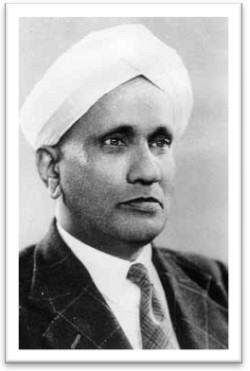
CV Raman


Observation of National Science Day attempts at generating scientific minded citizens. Science has contributed a great deal to human welfare. Through the gospel of reason and experimental observation, by which it works, it has enabled man to acquire intellectual and mental excellence. It helps inculcate scientific temper among school children.

Health and hygiene issues are prime concerns for the common people. The daily application of science like the use of clean drinking water, knowledge to eradicate contagious disease, the knowhow of various agricultural practices to increase crop production, the usefulness of biodiversity conservation, etc., should be disseminated to the future generation. Organizing activities with the involvement of large number of people results into purposeful interaction between the science fraternity and the common people for mutual benefit.

Amongst all the scientific discoveries of the modern times, the 'Raman Effect' is perhaps the best known to the Indian public, and for the understandable reasons. But the life of a scientist in India, particularly on those days, was not the life of a gentleman of leisure. It was a perpetual struggle, often bitter, against various odds- some due to the backwardness of the country, some due to the geographic isolation, other arising from diverse hostile forces natural in a cramped and foreign-dominated environment.

And yet Raman, and also many contemporaries of his, did manage to spark the growth of science in India. As we look back one hundred years after his birth, what we perceive in him is not mere great scientist but a microcosm of India with all her problems. In fact, in India he was a rare exception in his passionate involvement with scientific research till the end of his long life.

Chandrasekhar Venkata Raman was born to Chandrasekaran Iyer and Paravti Ammal as their second son on the 7th Novemver,1888 at Tiruvanaikkaval ( At the residence of maternal grandfather) in Tamil Nadu. He had his early education in Madras,(now Chennai). He started his career as an officer in the Finance Ministry but left his job to take up the palit Chair of Physics in Calcutta.

He was professor of physics at the University of Calcutta from 1917 to 1933 and in the latter year was appointed head of the Department of physics of the Indian Institute of Science in Bangalore. In 1947, he became director of the Raman Research Institute, also in Bangalore. He was knighted in 1929 and was named president of the Indian Academy of Sciences in 1934. Raman also studied the physical nature of musical sounds and the mechanics of musical instruments.

He wrote Molecular Diffraction of Light (1922) and The New Physics; Talks on Aspects of Science (1951). For his discovery of Raman Effect, he was awarded the Nobel Prize in physics on the 10th December, 1930 at age of 41. He was the first recipient of Bharat Ratna. He died on 20th November, 1970.

In 1921, When C.V. Raman was traveling by ship from England to India; he was struck by the beautiful hue of the Mediterranean Sea, and began wondering what made it blue. Thus began a chain of enquiry that was to culminate in the discovery of the Raman Effect, whose technological impact continues to felt in this day.

It was known by 1920 that the sky was blue due to a process called Rayleigh scattering. Raman wondered whether the Sea merely reflected the colour of the sky, or had a colour of its own using just a Nicol prism and observing the Sea at a proper angle convinced him that Water itself had a blue color. This led him and his group to undertake a detailed investigation of Rayleigh scattering from solid and liquids. His Experiment led eventually to the discovery of the phenomenon known as "Raman Effect".

"Why the Sky is blue"?

Light is electromagnetic wave. Thus it can affect the motion of the charged particles¬- electrons and atomic nuclei- which are the constituents of all matter. The electron is 2000 times lighter then the lightest of the atomic nuclei. Thus electrons in matter move much more rapidly than the nuclei and over much larger distance. Light falling on matter forces the electrons to oscillated at its own frequency. If this happen to coincide with natural frequency don't match exactly, the electronic motion is affected. The result is that the matter emits light of the same frequency in all directions – light is scattered.

For most materials, the scattering is stronger towards the blue or high frequency end of the spectrum. When sunlight enters the earth's atmosphere, it is scattered by air molecules with blue light being scattered much more strongly than red. This gives the sky its blue color as first argued by Lord Rayleigh. In this explanation, we have neglected the motion of the atomic nuclei. However, the nuclei provide the environment in which electrons move.

Thus the effect of the light on the motion of the electrons is in turn modified (polarized) by the motion of the nuclei. The intensity of the scattered light thus gets modulated with the frequencies associated with the nuclear motions. When the scattered light is analyzed by an instrument called the spectrometer, it shows the original spectral line as the carrier, and satellite spectral lines as sidebands, in much the same way as in the case of radio waves. This phenomenon, first observed by Raman and his group in 1927 is known as "Raman Effect".
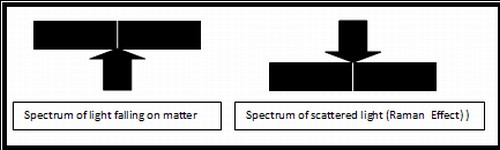


Raman and his co-workers found that of the two new lines, the red shifted was brighter than the blue shifted lines. These are known as Raman Stoke and anti Raman Stoke lines respectively. While this cannot be understood on the basis of the classical description given above, the quantum theory of light gives an adequate explanation of this phenomenon. The knowledge of nuclear motion provides the chemist and technologist an important toll in the study of materials.

The Raman Effect gives an alternative to the improved spectroscopy. It has inherent advantages, as it shifts to spectrum to the visible region where the instrumentation is much more versatile. Moreover, the shorter wavelength allows us to localize the beam much better, permitting small samples. The technological achievement of (importance of Raman Effect in the study of materials has led to the further and more sophisticated experimental set up known as Micro-Raman Analysis, Resonant Raman Analysis, Coherent, Anti-Stokes Analysis and so on.

Raman spectroscopy has widespread recent application in theoretical chemistry. Raman spectra are formed when, under certain conditions, light in the visible or ultraviolet region is first absorbed, and then is re-emitted at a lower frequency after causing molecules to rotate or vibrate.

Two magnetic methods of spectroscopy at the radio-frequency region of the spectrum, longer than the infrared band, are valuable in providing chemical information on molecules and showing their detailed structure. These methods are nuclear-magnetic resonance (nmr) and electron-paramagnetic resonance (epr), the latter also being called electron-spin resonance (esr). These methods depend on the fact that electrons and protons spin like little tops.

To align the spins, the specimen is placed in a magnetic field. Electrons or protons in the specimen "flip" over, reversing their spin axes, when the proper amount of radio-frequency power is supplied.

Thus the nation is giving a rich tribute to the first Asian Novel Laureate in science.

Let the candle of scientific awareness light every home


* R.K. Birjit Singh contributes to e-pao.net regularly . The author is a Science Communicator and can be contacted at bsningthemcha(at)gmail(dot)com
This article was webcasted at e-pao.net on 20th April 2010.


* Comments posted by users in this discussion thread and other parts of this site are opinions of the individuals posting them (whose user ID is displayed alongside) and not the views of e-pao.net. We strongly recommend that users exercise responsibility, sensitivity and caution over language while writing your opinions which will be seen and read by other users. Please read a complete Guideline on using comments on this website.


LATEST IN E-PAO.NET
  • Abdul Hafiz graveyard at Imphal War Cemetery
  • Violence in Manipur 2023-2026 : Timeline
  • Homecoming : Exhibition at Washington DC
  • Why NSCN-IM & ZUF must preserve Naga
  • The Funeral of Kindness :: Poem
  • Dignified menstruation for gender equality
  • World Environment Day 2026
  • Welcomes New DGP
  • Coming together of the indigenes
  • Martyrs' Day @ Cheiraoching #3 : Gallery
  • Showcasing product from IDPs at Switzerland
  • The abduction & 'murder' of 6 Naga civilians
  • Why keep returning to Regional Politics ?
  • One missed coffee & a full existential crisis
  • Trekking, Camping banned in Nongmaiching
  • Avocados Cultivation Programme at Pangin
  • Guwahati Open PWR 200 concluded
  • Focus on flip flop stand of the UNC
  • The King Who Came from the Sky: Pakhangpa
  • SoO : An assault on native people of Manipur
  • Manipur - Example of Underdevelopment
  • Cries in Agony :: Poem
  • 'CCpur & Kpi Road no longer safe'
  • Home Ground: Meghalaya Future of Tourism
  • Burnout healthcare staff & patient safety
  • Fate of hostages : Flip of the coin ?
  • Chakan Gang-Ngai 2026 : Ooba Video
  • Unfinished requiem- Linthoingambi & Hemanjit
  • "Ningol Van" Launched at Taobungkhok
  • Calm reflection vis a vis brute violence : Poem
  • Foundation Days of States/UT
  • World No Tobacco Day 2026
  • Breast Cancer Awareness in Guwahati
  • Licensed to create mayhem ?
  • How to Break Manipur w/o Breaking Any Laws
  • 17th Manipur State Film Awards (MSFA), 2025
  • World We Make, World That Makes Us : Poem
  • Counting Right, Voting Right: What SIR means
  • Calls on Indonesia to ratify tobacco treaty
  • Honourable exit for Ashutosh & Kailun
  • Police Museum at 1st Manipur Rifles
  • Eid-Ul-Zuha @Sangaiyumpham : Gallery
  • June Calendar for Year 2026 : Tools
  • 16th Manipur State Film Awards (MSFA), 2024
  • KIM's proposed rally must be called off
  • International Menstrual Hygiene Day
  • Plants : The force that engineered Earth
  • AC: How does it affect the skin ?
  • Onslaughts at Ukhrul district
  • Lhangpat Mei @Keishamthong #2: Gallery
  • Anthem of Switland :: Poem
  • CM visits Makhan Naga Village
  • Manipur University needs fresh air
  • False Narrative on Killing of Thadou Christian
  • Summer Coaching Camp 2026 @NSU
  • Tribute to Pu Mangvung Paokholun Haokip
  • Incursion from across the border
  • Radio E-pao: 5 new songs updated
  • Manipuri Community in Assam Calls for Vision
  • School dropouts & never-enrolled children
  • M. Tech at Assam University
  • Under One Sky or Leased ? :: Poem
  • When AI speaks in tribal languages
  • 'The Unbecoming' makes Northeast debut
  • After crossing the three year mark
  • Cheirao-chingkaba on Cheiraoba #2: Gallery
  • Anoi Group Art Exhibition 2026 : Download
  • Exploring Hyderabad's Museums #1
  • Maharaja Garib Niwaz : Manipuri civilisation #4
  • IEC Campaign at Willong Khullen
  • World Emergency Medicine Day 2026
  • Liver & GI super-speciality clinic
  • Adding more muscle to State Police
  • Rally at New Checkon- May 25 : Gallery
  • Hritwika Majumder at Miss Grand India 2026
  • How social media fuels division & ethnic tension
  • Saving Manipur's vanishing paddy & wetland
  • Helpline for Thadou people
  • 477 new Manipur Police Vehicles
  • NDPP-NPF merger accepted by ECI
  • Seeking to pitch Nagas against Meiteis
  • 63rd Mr. Manipur #3 : Gallery
  • Why CJP resonates with Manipur's youth
  • A moral, humanitarian reflection on violence
  • Financial assistance to IDPs
  • Legally binding treaty for older persons
  • Zoonotic Disease : Link animal & human
  • Jealous of Meloni
  • Making the bodies disappear !
  • Yaoshang - Cooking Competition : Gallery
  • Manipur State Award for Literature 2024
  • Manipur's unresolved Political Journey
  • 'Kuki is not an ethnic name'
  • Miyawaki Plantation Experiment at Langol
  • A Ploy to Keep the Chasm Wide Open : Poem
  • 45th Water India Expo 2026
  • Beating of the Retreat #1: Gallery
  • Martyred Rev Dr Vumthang Sitlhou
  • When Ima Weeps in Silence :: Poem
  • International Eld's Deer Day
  • Sticking to a consistent narrative
  • Arms recovered from Lamdeng: Gallery
  • Khatingla, Sumpa, Gaikhuluanlung : Eming
  • Exploring Kolkata: College Street #1
  • Wetland grabbing, hydropower, & ecologies
  • Condoles Demise of Khangembam Kuleswar
  • Upgradation of Imp-Jiri road: Poor planning
  • IEC Campaign at Phaibung, Senapati
  • In a mess for over 3 years now
  • The King Who Built a Golden Bridge : Kyampa
  • Mother's Day at Pukhao : Gallery
  • Manipur in India Constitutional Transition #3
  • Satyajit Ray's universal language
  • Decoding MLR & LR Act, 1960 & Article 371C
  • National Endangered Species Day 2026
  • India-New Zealand step into a new eco league
  • Posers over fate of abducted 6 Naga men
  • Sit-in protest @Kanglatongbi [May 18]: Gallery
  • Why communities must abandon hostility
  • Apatani's Next Top Model @Arunachal
  • The Fog of Uncertainty :: Poem
  • IEC Campaign at Song Song, Senapati
  • Supports TIM Proposal for Thadou-Naga
  • NE's Largest Psychiatric Hospital
  • Triangular clash underway in Manipur
  • Lamjen @ Thangjing Haraoba #1: Gallery
  • From Sympathy to Supremacy :: Poem
  • History repeats itself
  • Church Teams to visit Kangpokpi & Senapati
  • Workshop on Analytical Chromatography
  • Criminal Neglect, Terror Shielding
  • Summer make-up tricks to beat the heat
  • Pulling the strings to block the highways
  • Manipur Art Festival 2025 #3: Gallery
  • Manipur fermented food & scientific recognition
  • Seminar : Development of NE Region
  • World Hypertension Day 2026
  • Demands NIA Probe into Killing of Thadous
  • Suspected cases of Ranikhet Disease
  • PM's prescriptions & we
  • Flexing muscle on the roads of Imphal
  • Cheiraoba Chak Katpa #2: Gallery
  • Maharaja Garib Niwaz : Manipuri civilisation #3
  • The Dreamer's Dilemma :: Poem
  • Calls for Community Understanding
  • CM visits National Sports University
  • Condemns malicious press release
  • Reconnecting with our cultural roots
  • Condoles Death of Thadou Church Leaders
  • Yumjao Lairembi Haraoba #1 : Gallery
  • Manipur in India Constitutional Transition #2
  • Chronicle of princes & people's long defeat
  • SIR of Electoral Roll-Phase III
  • Program on New Income Tax Act, 2025
  • Book on Information, Reality, Life
  • 'Unfortunate incident at Zero Point'
  • Where is the Government poser
  • Sit-in protest @Kanglatongbi [May 14]: Gallery
  • 3 years on : Manipur's long road to peace
  • Int'l Triathlon Yengkhom Suraj felicitated
  • Ethniciity of Thadou Martyr Church Leaders
  • Colonial Knowledge Production in NE #22
  • Condemns Killing of Thadou Church Leaders
  • Condemns Attack on Thadou Church Leaders
  • Peace will Outlive Violence
  • Indo-Naga Talks (From 2012) :: Timeline
  • Bloody Night
  • Good girls first take care of themselves
  • Candlelight Vigil @ Bangalore #2 : Gallery
  • Maharaja Garib Niwaz : Manipuri civilisation #2
  • The Green Foundation recognised as a SIRO
  • Waithou Rally condemn civilian killing: Gallery
  • Manipur in India Constitutional Transition #1
  • Chahi Taret Khuntakpa
  • HSLC Exam 2026 : Full Result
  • HSLC Exam 2026 : Pass % : Govt Schools
  • HSLC Exam 2026 : Pass % : Aided Schools
  • HSLC Exam 2026 : Pass % : Private Schools
  • HSLC Exam 2026 : Withheld-students
  • HSLC Exam 2026 : Compartmental candidates
  • HSLC Exam 2026 : Statistical Abstract
  • HSLC Exam 2026 : Important Information
  • Cheirao-chingkaba on Cheiraoba #1: Gallery
  • Chandel District Head Quarters : Gallery
  • Indigenous Leaders Call for Global Recognition
  • International Women's Day : Gallery
  • Subika Art Exhibition @Washington : Gallery
  • Candlelight Vigil @ Bangalore #1 : Gallery
  • Vegetables @ Waithou Keithel #2 : Gallery
  • Conflict, Displacement in Manipur (2023-2026)
  • Tronglaobi: 2 children laid to rest : Gallery
  • Leingakta Wahang Khongchat #2 : Gallery
  • Martyrs' Day @ Cheiraoching #2 : Gallery
  • Featured Front Page Photo 2026 #2: Gallery
  • Free Online access to 'Asangba Nongjabi
  • Lhangpat Mei @Keishamthong #1 : Gallery
  • Candlelight vigil: Killing at TM Kasom : Gallery
  • Fractured sovereignty : Proxy war
  • Mama, I love you- Then the world went silent
  • Khongjom Day @ Khebaching : Gallery
  • Tronglaobi: Meira Rally #2 [16 Apr]: Gallery
  • Final Merit List : Manipur Civil Services 2022
  • HSE : Pushpa K, H Keniya, P Taibangnganba
  • Yohen Longjam : HSE 2026 : Science Topper
  • Sarangthem Ayingbi : HSE 2026 : Arts Topper
  • Thoihenba Thongam : HSE 2026: Commerce
  • HSE 2026: Science Full Result
  • HSE 2026: Arts Full Result
  • HSE 2026: Commerce Full Result
  • HSE 2026: Pass % - Govt / Non Govt
  • HSE 2026: Pass % - District Institutes
  • HSE 2026: Subject-wise Pass %
  • HSE 2026: Candidates securing Highest Mark
  • HSE 2026: Science Topper List
  • HSE 2026: Arts Topper List
  • HSE 2026: Commerce Topper List
  • Tronglaobi: Clashes @Lamlong 17 Apr: Gallery
  • The great Manipur betrayal
  • Tronglaobi: Meira Rally #1 [16 Apr]: Gallery
  • MoU between Nouwa Marup Pune & IBI
  • Tronglaobi: Meira Rally [15 Apr]: Gallery
  • Most Heinous Murder: Derailing Normalisation
  • Martyrs' Day @ Cheiraoching #1 : Gallery
  • Tronglaobi : Rally @ Uripok [12 Apr]: Gallery
  • Killing of 2 children @ Tronglaobi : Gallery
  • Yaoshang Thabal Chongba #2: Gallery
  • Of 'Boong', BAFTA, Bharat & Manipur
  • Boong & the Long Road of Regional Cinema
  • Boong: India's 1st BAFTA in children's cinema
  • PUCL Tribunal report: A shadow of partiality #3
  • PUCL Tribunal report: A shadow of partiality #2
  • PUCL Tribunal report: A shadow of partiality #1