
TODAY -
✦

Endangered Species: The Vanishing Wildlife

N Munal Meitei *
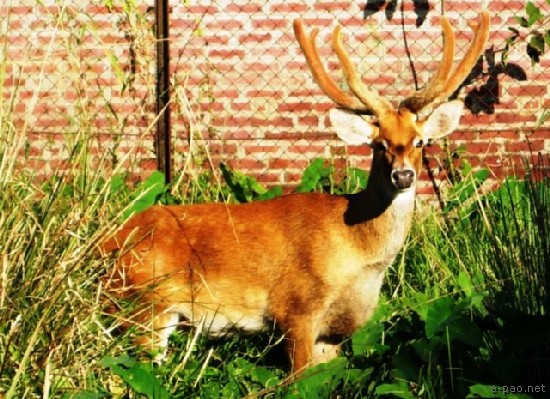
Sangai - A jewel in the crown for Manipur
Picture by Rocky Pebam


An Endangered species is a population of organisms which is at risk of becoming extinct because it is either few in numbers, or threatened by changing environmental or predation parameters. The International Union for Conservation of Nature (IUCN) has calculated the percentage of endangered species as 40 percent of all organisms based on the sample of species that have been evaluated through 2006.

Many nations have laws offering protection to conservation reliant species: for example, forbidding hunting, restricting land development or creating preserves.

Only a few of the many species at risk of extinction actually make it to the lists and obtain legal protection like Pandas. Many more species become extinct, or potentially will become extinct, without gaining public notice.

Conservation status

The conservation status of a species is an indicator of the likelihood of that endangered species not living. Many factors are taken into account when assessing the conservation status of a species; not simply the number remaining, but the overall increase or decrease in the population over time, breeding success rates, known threats, and so on.

Internationally, 199 countries have signed an accord agreeing to create Biodiversity Action Plans to protect endangered and other threatened species. In the United States this plan is usually called a species Recovery Plan.

Effect of Climate Change to Endangered Species

Before greenhouse gases and global warming, species were able to survive in their natural habitat. However the rapid increase of climate change has put animals at risk of becoming extinct. Nigel Stork in his article "Re-assessing Extinction Rate" explains, "the key cause of extinction being climate change, and in particular rising temperatures, rather than deforestation alone."

Stork believes climate change is the major issue as to why species are becoming endangered. Stork claims rising temperature on a local and global level are making it harder for species to reproduce. As global warming continues, species are no longer able to survive and their kind starts to deteriorate. This is a repeating cycle that is starting to increase at a rapid rate because of climate change therefore landing many species on the endangered species list.

IUCN Red List OF Endangered species

IUCN Red List refers to a specific category of threatened species, and may include critically endangered species. This Red List of Threatened Species uses the term endangered species as a specific category of imperilment, rather than as a general term. Under the IUCN Categories and Criteria, endangered species is between critically endangered and vulnerable. Also critically endangered species may also be counted as endangered species and fill all the criteria.

The more general term used by the IUCN for species at risk of extinction is threatened species, which also includes the less-at-risk category of vulnerable species together with endangered and critically endangered.

IUCN categories include:

  • Extinct: Examples: Javan Tiger, Thylacine, Dodo, Passenger Pigeon, Caribbean Monk Seal, Steller's Sea Cow, Aurochs, Elephant Bird, Woolly Mammoth, Dusky Seaside Sparrow etc.
  • Extinct in the wild: Captive individuals survive, but there is no free-living, natural population. Examples: Hawaiian Crow, Wyoming Toad, Socorro Dove, Red-tailed Black Shark, Scimitar Oryx, Catarina Pupfish etc.
  • Critically endangered: faces an extremely high risk of extinction in the immediate future. Examples: Mountain Gorilla, Bactrian Camel, Ethiopian Wolf, Saiga, Takhi, Kakapo, Arakan Forest Turtle, Sumatran Rhinoceros, Javan Rhino, Brazilian Merganser, Axolotl, Leatherback Sea Turtle, Northern White Rhinoceros, Gharial, Vaquita, Philippine Eagle, Brown Spider Monkey, California Condor, Island Fox, Black Rhinoceros, Chinese Alligator etc.
  • Endangered: faces a very high risk of extinction in the near future. Examples: Dhole, Blue Whale, Asian Elephant, Giant Panda, Snow Leopard, African Wild Dog, Green Sea Turtle, Malayan Tapir, Tiger, Steller's Sea Lion, Philippine Eagle, Markhor, Bornean Orangutan, Grevy's Zebra, Tasmanian Devil, Japanese Crane etc.
  • Vulnerable: faces a high risk of extinction in the medium-term. Examples: African Elephant, Cheetah, Gaur, Lion, Sloth Bear, Dugong, Polar Bear, Indian Rhinoceros, Komodo Dragon, Great White Shark, Hippopotamus, Mandrill, Fossa, Crowned Crane etc.
  • Near threatened: may be considered threatened in the near future. Examples: Blue-billed Duck, Solitary Eagle, American Bison, Jaguar, Maned Wolf, Tiger Shark, Southern White Rhinoceros, Okapi, African Grey Parrot, Striped Hyena, Narwhal etc.
  • Least concern: no immediate threat to the survival of the species. Examples: Common Wood Pigeon, Rock Pigeon, Giraffe, Common Bottlenose Dolphin, California Sea Lion, Brown Bear, Grey Wolf, House Mouse, Scarlet Macaw, Platypus, Human, Bald Eagle, Brown Rat, Cane Toad, Humpback Whale, Emperor Penguin, American Crow, Wolverine,[4] Mute Swan, Mallard, Red-tailed Hawk, Indian Peafowl, American Alligator, Southern Elephant Seal, Meerkat etc.
Currently, 1,556 known species in the world have been identified as endangered, or near extinction, and are under protection by Government laws of different countries (Glenn, 2006, Webpage).

In the United States alone, the known species threatened with extinction is ten times higher than the number protected under the Endangered Species Act (Wilcove & Master, 2008, p. 414). For US the Conservation status ranks are based on a one to five scale, ranging from critically imperiled (G1) to demonstrably secure (G5). Status is assessed and documented at three distinct geographic scales-Global (G), National (N), and State/province (S). The numbers have the following meaning:
  • 1 = critically imperiled
  • 2 = imperiled
  • 3 = vulnerable
  • 4 = apparently secure
  • 5 = secure
For example, G1 would indicate that the species is critically imperiled globally. In this sense the species as a whole is regarded as being at very high risk of extinction. A rank of S3 would indicate the species is vulnerable and at moderate risk within a particular state or province, even though it may be more secure elsewhere.

Biodiversity and endangered species

It is apparent that the quest for ecological knowledge, which is so critical for informing efforts to understand and conserve Earth's Biodiversity along with valued ecosystem goods and services, frequently raises complex ethical questions and there is no clear way to identify and resolve these issues. Biodiversity conservation is currently a principle goal for resource management of 11.5% of the world's surface area.

In order to conserve the Biodiversity of the planet, one must take into consideration the reasons why so many species are becoming endangered. Habitat loss is the most widespread cause of species endangerment on the Earth, affecting 85% of imperiled species. When an animal's ecosystem is not maintained, they lose their home and are either forced to adapt to new surroundings or perish. Pollution is another factor that causes many species to become endangered. Also, over-exploitation, disease (Wilcove & Master, 2008, p. 416), and climate change (Kotiaho et al., 2005, p. 1963) have led to the endangerment of several species.

Humans have an impact on the species and their environment. As human uses the resources, energy, and space intensified over the past few centuries, the diversity of life has been substantially diminished in most parts of the world (Ishwaran & Erdelen, 2006, p. 179).

Endangered species could prove useful to human development, maintenance of biodiversity and preservation of ecosystems. Another approach is known as Ecosystem conservation, where the focus is placed less on preserving any individual given species than on preserving the proper functioning of the ecosystem as a whole.

Helping to preserve endangered species

It is the goal of conservationists to create and expand upon ways to preserve endangered species and maintain Biodiversity. There are several ways in which one can aid in preserving the world's species who are nearing extinction. One such way is obtaining more information on different groups of species, especially invertebrates, fungi, and marine organisms, where sufficient data is lacking.

Another way to help preserve endangered species is to create a new professional society dedicated to ecological ethics. This could help ecologists make ethical decisions in their research and management of Biodi-versity. Also, creating more awareness on environmental ethics can help encourage species preservation.

One final way in which one can conserve Endangered species is that the Ecologists to have proposed Biological corridors, Biosphere reserves, Ecosystem management, and Eco-regional planning as approaches to integrate biodiversity conservation and socio-economic development at increasingly larger spatial scales.

Endangered species of Manipur

Many species found in our State are listed under endangered species. It is reported that about 18 species of fishes have been extinct from Loktak Lake during the last decade. But the State animal, the Brow-antlered deer, scientific name, Rucervus eldi eldi, is listed as Critically Endangered (CR) by the World Conservation Union (IUCN 3.1) and included in Appendix I of the Convention on International Trade in Endangered Species of Wild Fauna and Flora (CITES).

The Sangai was believed to be almost extinct by 1950. However, E.P. Gee who took all pains to locate the animal found six heads of the Sangai hovering at its natural habitat at Keibul Lamjao in Loktak Lake in 1953. A census conducted in the park in 2003 showed that there were 180 deer (Stag-65, Hind-74 and Fawn-41).

But during the past more than fifty years of protection, we are not able to increase the Sangai population above 300, the unsafe figure from extinction threat for any endangered species. Therefore, unless we the people of Manipur with a firm determination and also with a strict sanction from the Government side to save our lovely Sangai, such a critically endangered and one and only animals of Manipur which is facing from the verse of extinction, the law alone can not save them.

Therefore, it is our breathe responsibility to save the animals and other endangered species while it not too late.


* N Munal Meitei wrote this article for The Sangai Express .
The writer is a Range Forest Officer and can be reached at nmunal(at)yahoo(dot)in
This article was webcasted on June 22, 2011.


* Comments posted by users in this discussion thread and other parts of this site are opinions of the individuals posting them (whose user ID is displayed alongside) and not the views of e-pao.net. We strongly recommend that users exercise responsibility, sensitivity and caution over language while writing your opinions which will be seen and read by other users. Please read a complete Guideline on using comments on this website.


LATEST IN E-PAO.NET
  • Langban Tha Katchaba @Haying #2 : Gallery
  • Violence in Manipur 2023-2026 : Timeline
  • Prof Kamal Mitra Chenoy : Obituary
  • Tale of Ahu, Alang & Apapang: Amur Falcon
  • Consumerism :: Poem
  • Condemns Khamenlok Killings
  • Humble Appeal to All Concerns
  • Envious of the Chief Minister
  • Delivering a powerful point
  • Catholic Valley Schools Sports #1: Gallery
  • When the extraordinary becomes ordinary
  • The Map We Chose :: Poem
  • Dhakeswar Potsangbam : ToI Wellness Award
  • Nigeria calls on world to turn AMR pledges
  • Understanding the pressure students face
  • Training on Mushroom at Khagempali
  • Pointing finger of accusation
  • Digital Revolution & MK Binodini Devi
  • Exploring The Vanishing Self #15
  • Letter From A Lost Crony :: Poem
  • Procedural lapses in dismissal of Dr Bimol
  • Manipur Sanaleibak (The Golden land)
  • Training on Seismic Hazard @MU
  • 2026 edition of Hnahsin Kut
  • Oncology & Neurosurgery OPD launched
  • Yaoshang Thabal Competition #5: Gallery
  • Orchids of Manipur
  • Pharmacists: A misunderstood profession
  • Vision Service Week at Ibotonsana School
  • Drone Tech Bootcamp at NIT Meghalaya
  • Athokpam Krishnakanta : World 2% Scientist
  • No Solution Without Identifying "Kuki"
  • Stands in Solidarity with Prof Bimol
  • Taking the idea of Manipur to Senapati
  • Yumjao Lairembi Haraoba #3: Gallery
  • 'Enoong Ngallamdai' :: Movie Review
  • VanDyke Release: Diplomacy or US pressure
  • Mental Health Awareness at High Court
  • 2026 NAMA Research Grant [Upd]
  • Fermented food for beauty
  • Mizoram Targets 5-7% Tourism Share
  • The hills continue to burn
  • Hearthside Story of Naothingkhong #2
  • Between Delhi Power & Valley's Protagonists
  • The Zeliangrongpui at a crossroad
  • Mushroom Cultivation Training at Konthoujam
  • Break from within :: Poem
  • White Canes to Govt Ideal Blind School
  • Concerned: Conflict - Yimkhiung & Tikhir
  • Mizoram Travel Fest 2026
  • Condolence : Kh Armstrong Charang
  • Turning Imphal into a dumping site
  • Sushila & Bichu @Airport #2: Gallery
  • When prime-time spectacle replaces priorities
  • For a new world organization for peace
  • Intl Day for Disaster Risk Reduction @MTU
  • Solidarity with Professor Angomcha Bimol
  • Intl Day for Disaster Reduction @Wangkhei
  • Condemns Barbaric Killings
  • Schools, roads, power & water supply
  • 'Meeyamgi Khollao Khongchat' #2 : Gallery
  • RIST Talk #76: Gravitational-Wave
  • Breast cancer month, October, 2026
  • Free Screening of "Ishanou"
  • Unlocking potentials of 7 horticultural crops
  • Skies and me :: Poem
  • Eramdam hanna kanbiyu
  • The hills, the SoO camps
  • Mera Chaorel Houba @ Kangla #1 : Gallery
  • China's Mayor Economy
  • My muse :: Poem
  • Condemns Killings & Beheading of Civilian
  • Who doesn't do Vote Chori ?
  • EZE Perfumes Enters Northeast
  • One to one meet with PM
  • Exploring The Vanishing Self #14
  • 61st Hunger Marchers' Day #3 : Gallery
  • Humlennganba, Saka : Eming
  • Two interviews, one empty table
  • A landscape of silence :: Poem
  • NSS Runathon for Peace 2026
  • Gender equality- central to diplomatic leaders
  • Manipuri Calendar for year 2027 : Download
  • Meiteilon not Tibeto-Burman language: Rvw
  • Visit to George Gordon's tomb at Canchipur
  • Anandkumar Naorem: World Top 2% Scientist
  • Protect the hills to protect the valley
  • Call for Papers on Manipuri Pony
  • Ashok Singhal Ji - A Karmayogi
  • Addressing the basics of life
  • 228th Bheigyachandra @Nabadwip #1: Gallery
  • Wildlife Week Celebration at Thanga
  • Evolving women's role in Manipur tourism
  • Where do we go from here ?
  • Training Programme on Mushroom
  • Festival look for Navratras
  • Condolence : Demise of Adino Phizo
  • Significant Delhi invite to 3 leaders
  • Heterogeneous Structure of Meitei Society
  • Concert @ 18th Orange Fest #1: Gallery
  • When water management was Statecraft
  • Who switched off the respect :: Poem
  • All is not yet lost for Manipur
  • Wildlife Conservation: Securing the Future
  • Exam : Post of Under Secretary (Law)
  • Understanding narco-terrorism
  • 1500 Burma Refugees Families in 1968-1973
  • 17th World Bamboo Day : Gallery
  • Land affected families: NH-202 in Ukhrul
  • Training Programme on PCB Repair
  • World Habitat Day 2026
  • AMR survivor & WHO call to protect medicines
  • Cut fuel taxes, not food
  • Creating chaos on roads of Imphal
  • Sushila & Bichu @Airport #1: Gallery
  • Manipuri Pony: Case for Animal Science Univ
  • Hemp plant for sustainable textile & Manipur
  • Flame of the lamp & our cultural sensibility
  • Without you :: Poem
  • Welcomes Lalremsiami, Lalthantluangi
  • On the growing roadside eateries
  • Naga Peace Process: Indo-Naga Talk: Timeline
  • 36 Names: Manipur at the Asian Games
  • Abok Ki Singju to Premiere
  • A vision fragmented by corruption :: Poem
  • Gandhi Ji's 3 monkeys and Manipur
  • AI-powered X-Rays are helping find TB
  • Mizoram Reward Lalremsiami, Lalthantluangi
  • 15 years in power Vs 10 years in power
  • Exploring The Vanishing Self #13
  • US-Manipur Digital Archiving Workshop
  • 8th Cultural/ Freshers' Meet for Rongmei
  • The Same Smoke :: Poem
  • Supriya looks at HYROX World C'ships
  • AI4SEVA Hackathon @IT SEZ, Mantripukhri
  • 38th Foundation Day- NIELIT Imphal #2
  • Heikru Hidongba @Bijoy Govinda : Gallery
  • Manipur's Indigenous Natural Farming System
  • Basic human needs a struggle for Sinakeithei
  • Demise of Pame, Marinmai, Lianvela
  • When I met the pugilist Sarita
  • 38th Foundation Day of NIELIT Imphal #1
  • Mizoram's Anthurium Festival Returns
  • Poll fever seems to be catching up
  • My attempt - Meiteilon is not Tibeto-Burman
  • XXXII National Thang-Ta C'ship concluded
  • One Village One Product: A better alternative
  • When machines can answer, who will judge ?
  • Explain motive- Tronglaobi Terror Attack
  • Merger of 5 elected members of NPP
  • Namghar Unites Assam & Maharashtra
  • Trade and commerce : In a limbo
  • 130th Irawat Anniversary : Gallery
  • Lamyanba Irabot Day at Itanagar
  • Irabot's Ideals Remembered at Mumbai
  • Coffee as a sustainable alternative to poppy
  • Her Godname :: Poem
  • Polyendocrine Metabolic Ovarian Syndrome
  • Rejoinder to NPCC
  • Need to get priorities right
  • Irawat and Meetei National question
  • XXXII National Junior Thang-Ta C'ship
  • World Heart Day 2026: Don't miss a beat
  • Science in everyday life
  • Nature Education Workshop
  • Rejoinder to Dr S C Jamir
  • Daslakshan Mahaparva: Festival of 10 supreme
  • Focus back on SoO camps
  • Raengdai Vs NEROCA : Durand Cup : Gallery
  • October Calendar for Year 2026 : Tools
  • Lebensraum or ethnic cleansing
  • World Alzheimer's Day 2026
  • Sensitization Workshop on POSH
  • Mourns Passing of Aribam Shantimo
  • Lecture on 'Indigenous Knowledge Systems'
  • Rejects allegations by NPCC President
  • The narrative Manipur needs
  • Tour Diaries of Maxwell & Higgins #2
  • Laitonjam Rishikanta @ Asian Bodybuilding
  • First poster of Interlude released
  • In the womb of time :: Poem
  • Running an abnormal State
  • Khunung Eshei & Mukna competitions
  • Conference: Challenge in Sustainable Science
  • Rolling back the highway blockade
  • Exploring The Vanishing Self #12
  • Manipur Mesopotamia Force WWI : Gallery
  • PhD in Manipur : Fund it, Fix it
  • Many Voices, One State: Manipur's dilemma
  • Me and Moon: Both do the night shift : Poem
  • Putting rights: Body autonomy & sexual health
  • Green Tea for beauty
  • Yaoshang Thabal @Khurai #2: Gallery
  • AI = Arangpham Intelligence, the Frankenstein
  • World Pharmacists' Day 2026
  • Tapes of 1979 Film 'Ashroy' Discovered
  • From Pangaea to the unpredictable Earth
  • In a Crooked Room :: Poem
  • Debt recovery should be done, but within law
  • Regionalism : New political flavour
  • Chali-Saba - Kang Ningol Palli #1: Gallery
  • Book Release: Exploring The Vanishing Self
  • The Echo After Forever :: Poem
  • The paradox of Kukiland
  • Dr Wairokpam Yaiphaba : Fulbright Fellowship
  • Essay, Painting & Speech Competitions
  • Manipur : Mixture of opposites
  • Naothingkhong & Pitanga #1: Hearthside Story
  • Meiteilon is still not a Tibeto-Burman language
  • 52nd Foundation Day of AMWJU : Gallery
  • The chokehold on Manipur's potential
  • Another Langban has com :: Poem
  • Ageing needs a gendered human rights
  • Mizoram's 2026 festival season opened
  • Inspect the SoO camps
  • 61st Hunger Marchers' Day #2 : Gallery
  • lEkoLdugi warisiH :: Seireng
  • Can Strong Anti-Racism Law save NE Indians
  • Before Building a Viksit Bharat, Learning
  • Quality planting for Pineapple & Banana
  • Seminar: Career Options in Life Sciences
  • Fitclass Gym Moti Nagar Opens
  • Burning hills of Manipur
  • Culturals @Beating of Retreat #4 : Gallery
  • Justice for 6 Liangmai Nagas #2 : Gallery
  • 17th World Bamboo Day 2026
  • 12th Manipur Legislative Assembly : Gallery
  • The 731, and those who may follow
  • Exploring The Vanishing Self #11
  • Little Flower School, 1973 batch : Gallery
  • Bichu Kharibam: FIH Magic Skill Award
  • Tour Diaries of Maxwell & Higgins #1
  • Ningol Phida - Shumang Leela #2 : Gallery
  • Study: Social Worker on Counselling Practice
  • India-Myanmar boundary : Mistakes of 1967
  • Radio E-pao: 5 new songs updated
  • Chiru Maroi : Scientific Documentation
  • Academic Administration Course @MU
  • To our star Tamo Vicky, Vikram Chongtham
  • Vice President visited Manipur : Gallery
  • Langban Tha Katchaba @Haying #1 : Gallery
  • Hiring @ 4-Star Hotel in Udupi
  • Ibudhou Pakhangba Haraoba #1 : Gallery
  • Protest by Researchers @DM Univ : Gallery
  • Meitei Esei
  • US Ambassador @ CM Mantripukhri : Gallery
  • Chongtham Vikram: Delhi Cannot Explain Away
  • A teacher does not leave when his classroom
  • 'Meeyamgi Khollao Khongchat' #1 : Gallery
  • Candle Light- Chongtham Vikram : Gallery
  • Manipuri Pony Heritage Talk to Students
  • Colonial records: Hill Areas, 1891-1947
  • Joint Resolution: Abrogation of SoO
  • Elimination of Racial Discrimination
  • Justice for 6 Liangmai Nagas #1 : Gallery
  • Manipur Can Simply Be Manipur
  • PhD Admission at Assam University
  • Teachers' Day Celebration : Gallery
  • Census 2027 for Manipur deferred
  • Read Meitei Mayek news in romanized English
  • 24-hour Gen Strike (Sep 1) : Gallery
  • Panthoibi Anoi Khuthek #1 : Gallery
  • 48-hour General Strike by JFD #3 : Gallery
  • The flame of Haipou Jadonang
  • Kang Khichri Chaba #2 : Gallery
  • Relevance of NRC, 1951 for immigrants
  • Featured Front Page Photo 2026 #4: Gallery
  • The King Who Caught a Bird : Konthoupa
  • Meira Rally 'No NRC, No Census' : Gallery
  • 48-hour General Strike by JFD #2 : Gallery
  • 35th Manipuri Language Day, 20 August
  • The chappals we leave behind
  • Search 25 years of e-pao.net
  • Colonial Knowledge Production in NE India #23
  • 360° panoramic view of spots in Manipur
  • Final Merit List : Manipur Civil Services 2022
  • PUCL Tribunal report: A shadow of partiality #3
  • PUCL Tribunal report: A shadow of partiality #2
  • PUCL Tribunal report: A shadow of partiality #1