Manipur the �Jewel of
India� or the
�Switzerland of the East� has so many peculiar features. Endemic
plants,
animals and scenic beauties regardless of any exaggeration, will always
be
pristine. The state which lies between the 230 80� N -
250 68�
N and 930 03� E - 940 78� E at the North East
extreme of
India, nestling at an altitude of about 790 m above the mean sea level
was
guarded naturally by nine ranges of hills (Fig.1). Although, Manipur is
a small
state (area = 22,327 Sq. Kms), the species endemism are surprising
large. The
climate, topography, and geographical conditions are somewhat different
from
the rest of the world, determining the large number of biological
diversity in
this state.
Adding
more
to its beauty like a sparkling diamond amongst the pearls, a beautiful
lake
known as �Loktak Lake� shines at the center of the state. Loktak (LOK =
stream
+ TAK = the end) is the journey end of several streams and rivers. It
is also a
pulsating lake, which is about 500 Sq. Kms during rainy season and 250
Sq. kms
during winter and is proud to be the largest fresh water lake in the
northeastern region of India.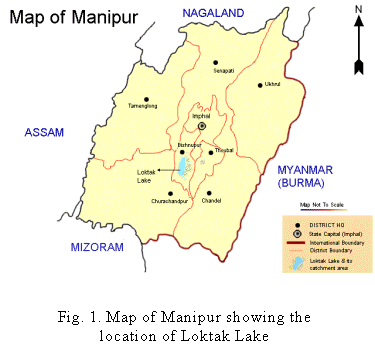
The
cultural and the traditional aspects of Manipuris will never be
completed
without relating this lake, which has been witnessing the whole history
from
the beginning of the Manipuri civilization.
�Moirang Kangleirol� among the various examples is still
remembered till
today. This lake is inevitable to the communities of
Manipur.
Loktak
Lake
is becoming very important in terms of its socio economic value,
environment,
cultural, tourism, habitats of numerous waterfowls, plants, animals,
fishes,
its dynamic ecological system, potential natural resources etc. were
all
becoming indispensable to the people of not only Manipur, but also to
the
world. The first international concern of this lake was in the year
1990 in
which �the Convention on Wetlands of International Importance� drafted
at the
Iranian City of �Ramsar� (1971) gives full emphasis of the Loktak Lake
for its
peculiar characteristics. This convention simply known as �Ramsar
Convention�
thereby brings the Loktak Lake into the international status for its
uniqueness
and put into the limelight for its conservation and
management
Out
of the
18,37,149 (as per 1991 census) populations of Manipur about 12 Lakhs
people are
directly or indirectly benefited from this lake. Foods, agriculture,
irrigation, pisci-culture, energy, aesthetic and recreational values
are
exploited by the people since time immemorial. Thus, the exploitation
of the
various renewable and nonrenewable resources decides the socio-economic
condition of the state. During the 1979 Manipur famine, the fruits of
Trapa
bispinosa/Trapa natans (Heikak) and Euryale ferox
(Thangjing) were
the only sources of livelihood for thousands of
people.
Just
two
decades back, the biodiversity of Loktak Lake was very rich in its
floristic
and faunistic value. However, today, the most important fauna of this
lake, the
Brow-antelered deer or Cervus eldi eldi (Sangai) is at the verge
of
extinction. Efforts are made by the government, voluntary
organizations, and
individuals to conserve this priceless deer species from extinction. In
1977
the Indian Board of Wildlife gave �Keibul Lamjao� the status of a
national
park.
A
recent
survey of the Loktak Lake revealed many of the undesirable factors,
which we
have been avoiding till today, either knowingly or unknowingly. An
attempt to
make the decision-makers aware about the fate of this lake has been put
forward
in this brief report. The major issues are as
follows:
1. Waste products brought by the rivers
Nearly 29 to 30 rivers and streams feed Loktak
Lake.
�Ungamel Channel� (Ithai Barrage) is the only outlet for this lake. The
perennial rivers and streams, which flow into Loktak Lake, bring
sediments
every day in their course to the lake. Continuous soil erosion in the
hilly
terrain due to deforestation further enhances the process. The
sediments
deposit at the mouth of the rivers contributes to shallowing of the
lake
bottom. As most of the rivers flows in the heart or center of the
cities and
towns, the urban sewage dumped into these rivers ultimately reached the
lake,
whereby contributed in deteoriating the delicate ecosystem of the lake.
Highly
toxic substances such as insecticides, pesticides, oils, polythene
bags, other
non-biodegradable waste and municipal wastes further create a
disastrous
situation to the lake environment. �Nambul� river the most polluted
river in
Manipur ends up in this lake after depositing whatever possible
pollutant it
bring in its course. �Thongjaorok� or Bishnupur River on the other hand
brought
its entire sediments load, cause due to mass deforestation in the upper
part of
the hilly region of this river.
2. Soil erosion at Thanga Island
Today the face of
�Thanga Island� has become scared by both natural and
anthropogenic actions. Among the natural causes are the wind, waves,
rainfall,
and weathering of the rocks. This phenomenon was greatly enhanced by
the human
intervention, to fulfill the needs in an unsustainable manner. Various
activities such as road construction, housing, playgrounds, schools,
clubs,
theatres etc. are degrading the environment of this island at its
utmost level.
Circular road constructed around this hill island by cutting trees and
the
sides are making unaesthetic and erosional features. Control measures
over this
highly populated hill island is out of question and it will remain
unrestored,
witnessing its dwindling environment helplessly, till it submerge into
the
lake!
3. Floating huts or Phumshang
Although a traditional way
of
living and a unique feature of Loktak Lake created by the local
fishermen,
�floating huts� or �phumshang� has disrupted the environment of the
lake. As
the population of the fishermen increased the number of phumshang also
increased manifold. Now the huts can be estimated upto 2000 in number.
Various
plastic ropes, heavy rocks, woods, bamboos, zinc plates, iron rods etc.
were
use to construct the huts. Numerous pesticides and insecticides are
also used
for catching fish or as insects repellent. The live of a phumshang can
be
estimated upto 20 years, after that it sinks into the lake causing all
the
possible environmental degradation it can result!
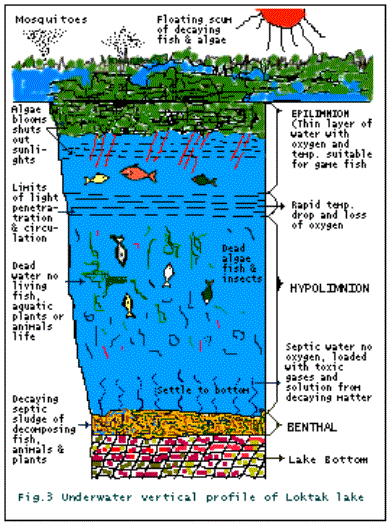
The
main
concerns of phumshangs are the formation of vertical profiles of the
lake water
body (Fig.3). The phumshang, which was made by accumulating hydrophytic
plants,
rocks, woods, bamboo�s, plastic ropes etc. blocks the sunlight to enter
into
the water. The lower portion of the floating hut decomposed and sinks
down on
the lake bottom, which is termed as �benthal�. The decomposed materials
of
benthal released toxic gases like methane, H2S, etc.
dissolving the
oxygen and making the water septic and polluted for the aquatic plants
and
animals to survive. The layer above benthal, which is a dead water
zone, is
called as �hypolimnion�. Above hypolimnion, a thin layer termed as
�epilimnion�
is the only place for some game fish to survive. In this zone, very
little
penetration of sunlight allows aquatic plants to grow and local fish to
survive. Today, the benthal of Loktak Lake has become increasingly
thick, which
not only pollute the lake water but also contributed largely in
shallowing the
lake.
4. Extinction/Loss of indigenous species
Introductions of new and
alien
species of animals or plants are sometime drastic to those introduced
habitats.
Some of the best examples are the introduction of rabbits in Australia
and pigs
in Mauritius. These two animals had caused all the possible destruction
in
these two island nations. In Australia all the vegetation�s and crops
destroyed
and the population of rabbits increased astronomically, so the
Government
declared it as pest. Whereas, during the 17th century in
Mauritius
the Dutch introduced pigs� breaks down all the eggs of the flightless
bird
called �Dodo�, now dodo is extinct (since 1692) and can never be seen
in this
world.
Similarly,
during the 80s the Government of Manipur had introduced many species of
fishes,
amphibians, insects and plants into the Loktak Lake without any
concerns about
the future consequences of the introduction of new and alien species.
Among
these are the grass craps, silver craps; insects like Weevil species
(Neochetina
eichhornia and Neochetina bruchi) etc. These have causes
many
perturbations to this lake ecosystem. Bottom-feeding rough fish stir up
sediment, which released phosphorus. Indigenous species of fishes,
plants and
animals are rarely seen now. Earlier, during the 60s and 70s the lake
was decorated
with Nelumbo nucifera (lotus), Nymphaea stellata (lily),
Alisma
plantago (Kakthrum), Sagittaria sagittifolia (Koukha),
Setaria
pallidefusea (Kambong), Oenanthe javanica (Komprec),
Alpinia
galanga (Pullei) etc. but today where has it all gone? Once Loktak
Lake was
a playground for the local fishes like Channa punctatus (Ngamu),
Anabus
testudinius (Ukabi), Anguilla (Ngaril) and other locally
known
fishes such as Pangba, Tharak, Ngashap, etc. These fishes have now
cursed the
human being and surrendered to its rivals (introduced fishes) and
slowly
leaving its own home!
Why
it
happens to our beloved Loktak Lake? The answer is we forgot to conserve
our
precious lake in a sustainable ways. The competitions amongst the
introduced
fishes and the local fishes, clearance of the breeding sites of the
local
habitats, water pollution, blockage at the Ithai Barrage dam for the
periodic
spawning fish to swim upstream, eutrophication and the menace of
Eichhornia
crassipes (Kabokang), stratification of the lake, over fishing etc.
are the
major culprits. Recent out break of the fish�s disease �Holo-ulceritis�
or UDC
(ulcerative disease symptoms) was all due to highly polluted water
body. The
victims of this disease were mainly the indigenous fishes.
The
famous
endangered Cervus eldi eldi (Sangai) is now at the mercy of the
ruthless
human being and the fate of extinction is knocking at the heaven�s
door!
Strategies
to preserve Sangai were framed, rules and regulations are made, various
do�s
and don�ts were put into force. But the sad part is that the population
of
Sangai is always at the danger mark. This is because the authorities do
not
realize the actual meaning of ecosystem preservation. It is that the
small
plants, animals, birds and the microorganisms, which are more
vulnerable to
human perturbations. They interact with their nonliving environment to
make
sustain and survive this valuable Sangai and what else, we human being
too!
Therefore, the conservation of the minute plants and animals, also the
physical
and chemical environments are more or less important like we do for our
Sangai.
Today, we are witnessing the failures of the conservation strategies of
the
government, which is likely to be continued in the near future also.
The
victims will not be our Sangai but it is our coming generations that
will live
grievously by the betrayal of their ancestors.
5. Water pollution
Detergents, soaps and other
phosphates and nitrates containing chemicals, which brought down by the
rivers
to this lake cause �eutrophication� of the lake. In this process algal
blooms
started and compete with other aquatic plants for light and nutrients.
These
blooms release toxic chemicals killing aquatic plants, animals, and
birds and
deplete oxygen; thus water begins to stink. As the water body is
lentic, the
decomposed organic matters remain in the lake for a very long time. Use
of
chemical weedicides, rapid accumulation of weeds near the lake shores,
use of
pesticides and insecticides, chemical fertilizers, and other
non-biodegradable
substances are all the factors for causing the lake water
polluted.
6. Shallowing of the lake
As mentioned in Section 1,
nearly
29 to 30 rivers and streams feed the Loktak Lake. The incoming rivers
and
streams brought sediments and dump it into this lake. The outlet
(Ungamel
Channel) removes only the excess water and practically no sediments.
The
depression is fill up with sediments and in course of time converts
into
terrestrial landform. The process is known as �Hydroseric Succession�.
Therefore, the life of all the lakes is not
permanent.
The
Loktak
Development Authority (LDA) decisions of dredging the lake bottom are
too fast.
The officials should understand the ecological perturbations and the
future
consequences. They should adopt a comprehensive Environmental Impact
Assessment
(EIA) report. The decision of the EIA should involve the local people
and
transparent. Foreign consultant will do no good for this lake because a
thorough on site survey of the lake is needed for any conclusive
decision.
Otherwise, the failure of the project is
inevitable!
7. Impacts on Migratory birds
Migratory birds are the
indicators
of climatic change. They flew from one place to another where there are
abundant food supplies and suitable climatic conditions with nestling
sites.
Earlier flocks of migratory birds annually arrived in this lake from
far-flung
place like �Siberia� and other parts of the world. Siberian cranes,
wild ducks,
herons, pink-headed ducks etc. are some of the birds, which annually
visited
Loktak Lake. Just a decade back the sky was alive with flocks of birds
and the
quacking were heard everywhere in Manipur. Today�s generation has miss
something very unique and they are not going to hear or see either the
native
birds or the migratory one.
Pink-headed
ducks were reported to be extinct from the lake by the British�s due to
extensive shooting. The native brown crow (Kwak), which was once a
sacred bird,
is no longer heard cawing. The possible causes are climatic change,
extensive
shooting or killing, over population of human, deforestation, habitat
destruction, use of pesticides and insecticides in agricultural
practice etc.
8. High water level
As the lake become
shallower the
level of the water also rises. Thousands of hectares of cultivable
lands and
grazing fields are submerse into the water. People migrated from their
original
land and become poor and helpless. Thousands of tons of producible rice
are now
lost. Poverty, unemployment and lack of proteins are making the people
disturbed. On the other hand the once cultivated field, which are now
submerge
are producing weeds!
The
Loktak
Hydro Electric Power Corporation is enjoying the high water level. But,
it is
not the high level of water, which the project should concern; it is
the volume
of water, which the project should focus. The more the volume of water,
the
more will be the energy production. It can only be satisfied if the
lake is
deep. To make it deep, a comprehensive environmental study is seriously
needed
by giving full emphasis on ecosystem conservation and sustainable
development.
9. Water scarcity and energy crisis
The NHPC promised 105
megawatts of
electricity has become a lip service within a short span of time.
Energy theft
and non-payment of taxes, which was levied for the electricity
consumers and
importantly the most concerned water volume, makes them helpless.
During winter
when the lake water reduced drastically, further generation of energy
usually
stop. To cope up this problem the Loktak Development Authority (LDA)
was set
up. It is difficult to predict the future of LDA presently, but easy to
tell
the fate of Loktak Lake, which LDA has been continuously destructing
the
pristine ecosystem. In the process of dredging, a large number of flora
and
fauna are perturbed. It is still unclear whether the LDA is going to
dredge the
buffer zone of the Keibul Lamjao National Park where the endangered
deer
species Sangai thrive.
10. Impacts on socio-economy of the state
Loktak Lake is the common
resource
of the people of Manipur. Large amount of incomes can be generated, if
it is
manage and utilize in a proper and sustainable ways. Resources such as
fisheries, agriculture, irrigation, biological resources, tourism,
hydropower
projects, etc. are readily utilizable from this lake. Presently, it is
found
that resource utilization is minimal whereas resource depletion is very
high.
Thus it brings about the concept of the �tragedy of
common�.
The
tragedy
of common or the major economic crisis are brought about by the
submerged
cultivable lands, submerged grazing fields of cattle�s, poor harvesting
of
fishes, failure of the power supplies due to lesser water volume,
unemployment
etc. One best example of the economic crisis is the submerged grazing
grounds,
which leads to reduction in the cattle�s population. To cope up the
problems
new management strategies should be taken up by monitoring and
evaluating the
various potential impacts and drew attentions to the public for
participation
in restoring this lake.
11. Human impact on the ecosystem
Man is responsible for all
the
disastrous situation of Loktak Lake. Using of hazardous substances such
as,
DDT, PCB�s (Polychlorinated biphenyl), greases, phenols, plastics,
plasticizers, metallic wastes, suspended solids, toxins, acids, salts,
dyes,
agricultural fertilizers, pesticides, insecticides, oil and petroleum
products,
and other municipal wastes brought by the rivers, makes the lake a huge
dead
water body. With these substances contaminating the lake, various
plants,
animals, microorganisms, molluscs, fishes, birds, amphibians, reptiles,
and
even human were severely affected. Instances of food poisoning and
disease
symptoms were frequently reported after consuming the contaminated
fishes and
other foods.
Oil
spilled over the lake surface reflected the incoming sunlight and
degraded the
ecosystem and the water become unwanted for further use. Plants,
animals,
birds, were the victims of this pollutant. Another concern is the poor
sanitation of the local people, which largely contributed in spreading
diseases, and degradation of the environment. The once beautiful lake,
which
was full of birds, flowers, beautiful insects, butterflies, buffaloes,
wild
boars, deer�s, fishermen, and other natural gifts will not be witness
by the
coming generation
12. Conclusion
Is not it our concern today
for the
coming generations to live in harmony with the local environment? We
have
tortured too much of our precious Loktak Lake. It�s now time for us to
give
some attention towards its dwindling environment and stop the
manipulation
created by laymen. Before its too late, we should join hand and come up
with
some solution. The various negative factors given above can be made
slower if
we adopt certain lake restoration techniques such as: treatment ponds
and
wetland, watershed management, fish harvesting, aquatic plant control,
aeration
system, alum treatment, modeling of lake phosphorus budget, vacuum
sweeping,
waste water discharge control, hypolimnetic aeration, erosion control,
rough
fish removal, dredging, draw down, dilution, flushing etc. The
government,
university, colleges, local people, voluntary organizations and
individuals are
appealed to wake up and carry out some new and innovative program for
conserving this lake ecosystem at the earliest. Last but not the least;
politics should not be constrains for this developmental
scenario.
For any queries, please contact:
Khwairakpam Gajananda (CSIR/SRF)
(Member 18th
Indian
Scientific Expedition to Antarctica)
R.No.210, Radio &
Atmospheric
Sciences Division,
National Physical
Laboratory, New Delhi-110 012
E-Mail: [email protected]
[email protected]
* Thokchom Sundari Chanu (Secretary Finance)
D-Cacus-Education Center,
(The Development on Communication Arts & Culture, Science, Economic & Education Center, H/O Ningthoukhong)
New Delhi
Branch.
Nanakpura Guru Dwara, Moti
Bagh,
New Dehi-110 021
E-Mail: [email protected]
|